Summer Skin Care: How to Protect Your Skin and Keep It Healthy
Learn how to protect your skin from sun damage, prevent pigmentation and maintain healthy hydration during the summer months on the Costa del Sol.
In this article
- 01.Why does the skin change during the summer?
- 02.The most frequent mistakes in skin care during summer
- 03.How to maintain hydrated and luminous skin
- 04.The importance of preventing sunspots
- 05.Can aesthetic medicine treatments be performed during the summer?
- 06.How the sun influences facial aging
- 07.When is a medical evaluation recommended?
- 08.Frequently Asked Questions
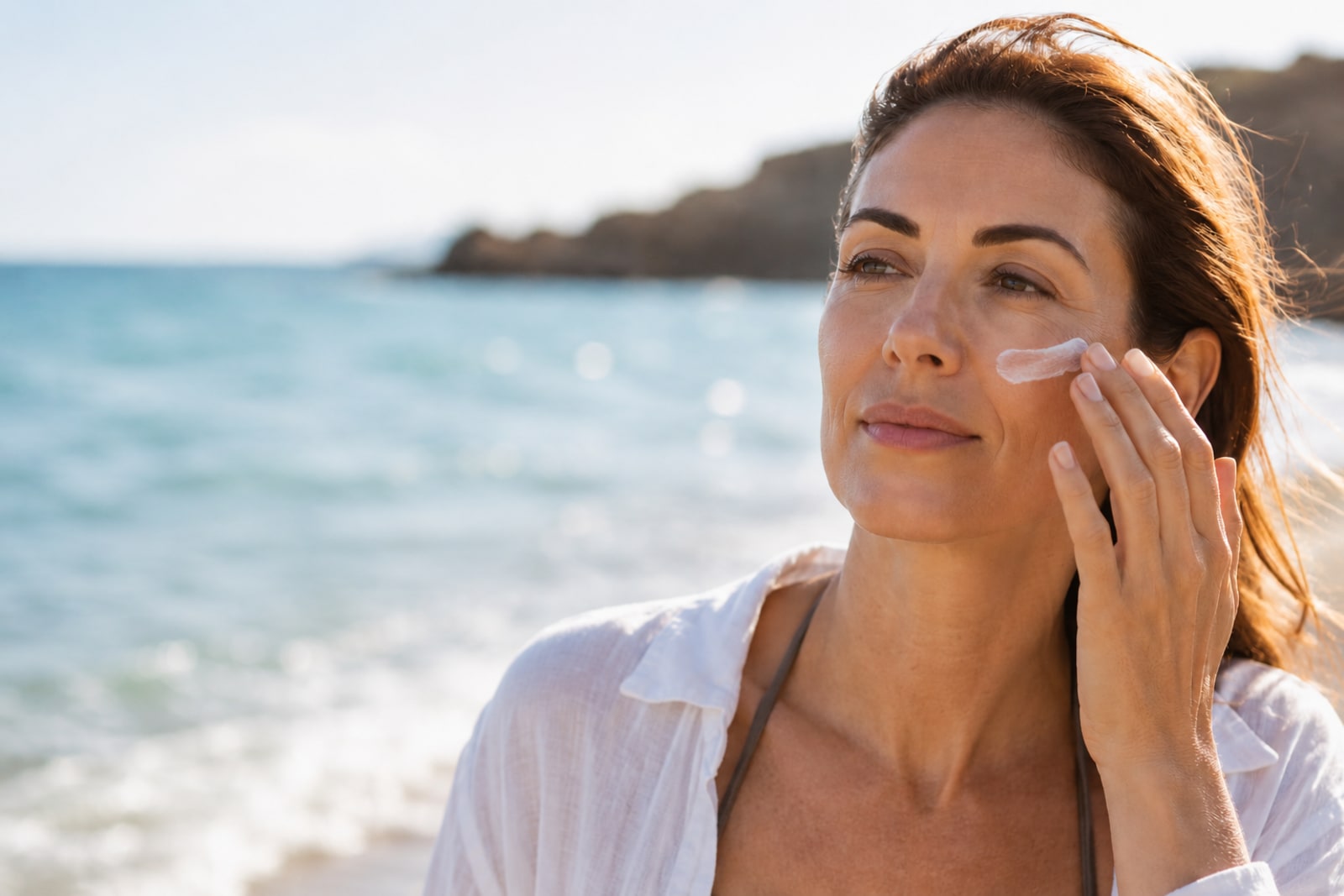
During the warmest months of the year, sun exposure, heat, and environmental changes can accelerate skin aging. A proper routine of prevention and care helps maintain healthy, luminous, and balanced skin.
- Broad-spectrum facial sun protection as a fundamental pillar.
- Deep hydration and antioxidants to combat oxidative stress.
- Active prevention of photoaging and the appearance of sunspots.
- Compatibility of aesthetic medicine treatments during the summer season.
Why does the skin change during the summer?
Summer on the Costa del Sol brings long, sunny days, but also environmental conditions that challenge the skin barrier. The combination of increased ultraviolet (UV) radiation, high temperatures, and humidity directly alters the physiological functioning of our skin.
The heat increases sweating and sebum production, which can clog pores and trigger breakouts. Furthermore, continuous exposure to chlorine in swimming pools and salty sea water dehydrates the stratum corneum, weakening its natural defense function. At the cellular level, solar radiation generates a massive increase in free radicals, triggering oxidative stress that damages collagen and elastin structures.
The most frequent mistakes in skin care during summer
Despite growing awareness about skin health, it is common to fall into certain inappropriate practices that compromise the quality and youthfulness of the face:
- Relying on a single daily application: Facial sunscreen loses its effectiveness due to sweating, friction, and water. Failing to reapply it every two hours negates its protective function.
- Prolonged sun exposure during peak hours: Exposing yourself to the sun between 12:00 and 16:00 critically increases the probability of sunburn and cumulative solar damage.
- Believing that a tan protects the skin: A tan is a defense response of the skin against the aggression of UV radiation; it is not an effective protective barrier.
- Neglecting hydration: Thinking that oily or combination skin does not need hydration in summer due to excess sweat and sebum is a common mistake that can dehydrate and flake the skin.
How to maintain hydrated and luminous skin
To show off a healthy and radiant face during the summer, it is necessary to adapt the daily care routine focusing on lightness and antioxidant protection:
- Constant internal hydration: Drinking enough water throughout the day is vital to maintain cellular turgor of skin tissues from within.
- Light-textured cosmetics: Replacing dense creams with serums or fluids containing hyaluronic acid, which retain water in the skin without adding heaviness.
- Use of topical antioxidants: Incorporating Vitamin C or ferulic acid in the morning before facial sunscreen to neutralize free radicals induced by the sun.
- Simple care routine: Maintaining a gentle cleansing at night to remove sunscreen residues, sweat, and pollution, followed by light, repairing hydration.
The importance of preventing sunspots
Hyperpigmentation or the appearance of sunspots is one of the main aesthetic concerns after the summer. Ultraviolet radiation stimulates the production of melanin in a disorganized way, giving rise to solar lentigines or melasma in exposed areas such as the forehead, cheekbones, and upper lip.
In addition to altering the homogeneity of the skin tone, these spots are a visible sign of photoaging and accumulated solar damage in deep layers. Early prevention through the use of antioxidants, gentle depigmenting agents allowed in summer, and strict sun protection is the most effective strategy to avoid complex corrective treatments in the future.
Can aesthetic medicine treatments be performed during the summer?
There is a false belief that aesthetic medicine must be paused entirely during the warm months. However, many of the most demanded facial treatments are perfectly compatible with summer, provided that medical guidelines for care and photoprotection are followed.
Treatments such as the application of neuromodulators to relax dynamic wrinkles in the upper face, collagen biostimulation with Radiesse to combat flaccidity, facial mesotherapy to infuse vitamins and deep hydration, or the infiltration of hyaluronic acid to restore volumes and contour key areas, can be performed with total safety. After the session, it is essential to avoid direct sun exposure for the first few days and maintain strict photoprotection. If you wish to understand the metabolic and physical behavior of the injected product under solar radiation and heat, we recommend reading our hyaluronic acid complete scientific guide. If you have questions about the ideal timing for your session, please contact us for personalized advice.
How the sun influences facial aging
The sun is responsible for approximately 80% of premature facial aging, a process clinically known as photoaging. Ultraviolet radiation penetrates into the deep layers of the dermis, altering cellular DNA and destroying collagen and elastin fibers.
Consequently, the skin rapidly loses its firmness, elasticity, and recovery capacity. Visually, this translates into a rough texture, the appearance of deep wrinkles, sagging, and chronic dehydration. Protecting the skin from the sun is not just a matter of aesthetics, but a fundamental preventive measure to preserve the structural integrity of the face.
When is a medical evaluation recommended?
Each skin type has specific needs and tolerance levels regarding solar radiation and heat. Therefore, having an individualized evaluation by a healthcare professional is the best way to establish a safe and effective preventive plan.
Dr. María Fernanda Ocampo, at the Vasari Clinic in Benalmadena, offers a medical and preventive approach, helping each patient select the ideal cosmetics, establish adapted routines, and recommend clinical treatments that best help keep the face protected, balanced, and revitalized during the summer season.
Frequently Asked Questions
Each skin responds differently to solar exposure. An individualized medical assessment allows for the design of prevention and care strategies tailored to the needs of each patient.

Content reviewed by Dr. María Fernanda Ocampo
Graduate in Medicine and Surgery with specialized training and experience in Aesthetic Medicine, currently practicing in Benalmádena (Málaga).
The information in this article is for informational purposes only and does not replace an individual medical assessment.
Would you like a personalized assessment?
Book your informative appointment at Vasari Clinic to design a treatment plan adapted to your needs.
Vasari Clinic
Av. Federico García Lorca, 35 • 29631 Benalmadena
Written by
Dra. Maria Fernanda Ocampo